
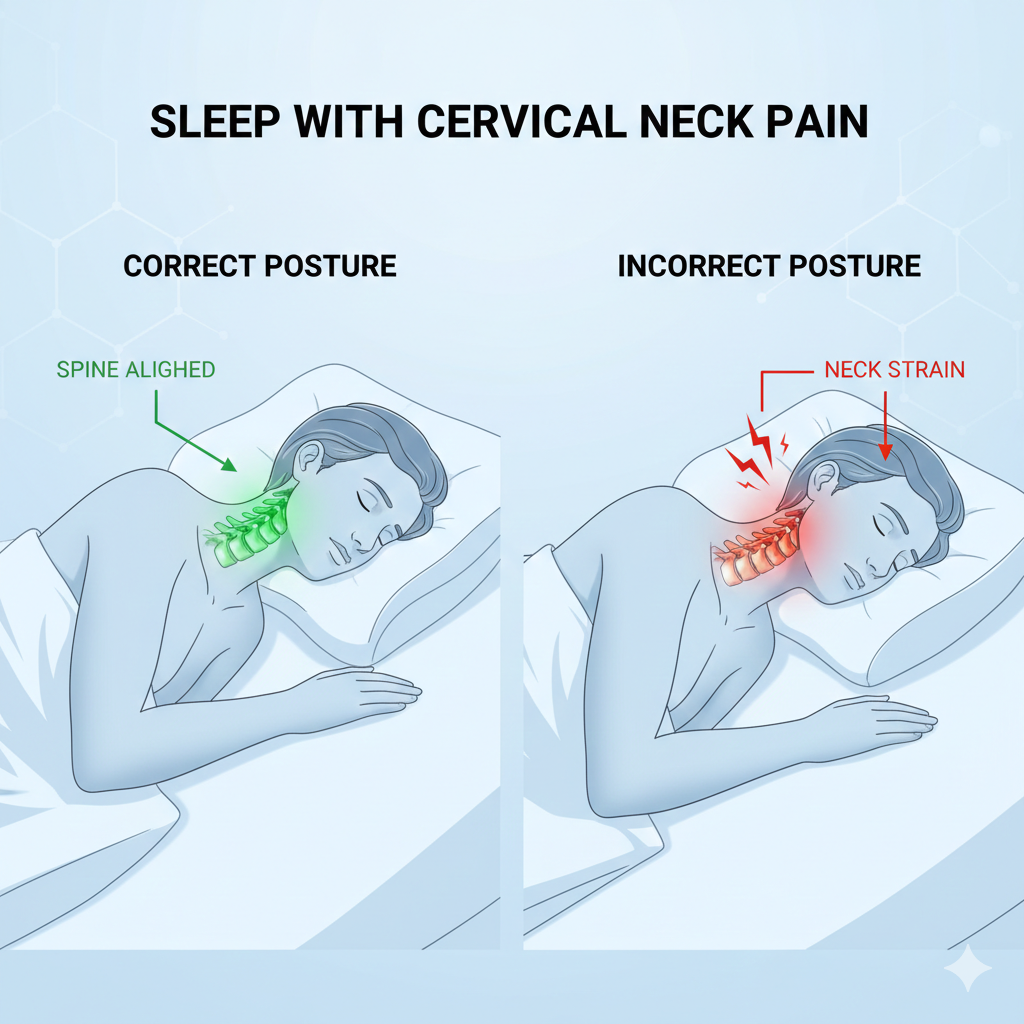
Cervical neck pain can turn a restful night into a struggle. Whether caused by poor posture, stress, or an underlying condition, neck pain often worsens when sleeping. Finding the right sleep position, pillow, and routine can make a significant difference. In this guide, we share expert-backed tips to help you sleep better while managing cervical neck pain.
Understanding Cervical Neck Pain
Cervical neck pain originates in the cervical spine, which includes the seven vertebrae in your neck. It can result from muscle strain, herniated discs, arthritis, or prolonged poor posture. Symptoms commonly include stiffness, limited range of motion, headaches, and pain radiating to the shoulders or arms.
Sleeping incorrectly can aggravate these symptoms, making it essential to adapt your nighttime routine to support neck health.
How Poor Sleep Affects Neck Pain
Sleeping in awkward positions or using the wrong pillow can place unnecessary strain on the cervical spine. Poor alignment may worsen stiffness, cause muscle tension, and even lead to chronic pain over time.
Additionally, disrupted sleep can increase inflammation and lower your pain threshold, creating a vicious cycle of discomfort.
Best Sleep Positions for Cervical Neck Pain
Sleeping on Your Back
Back sleeping is often recommended by experts for neck pain. It allows the head, neck, and spine to rest in a neutral position.
Tips:
Use a cervical pillow to support the natural curve of your neck.
Place a small pillow under your knees to reduce strain on your lower back.
Sleeping on Your Side
Side sleeping can also be beneficial if done correctly. This position helps reduce snoring and supports spinal alignment.
Tips:
Keep your head in line with your spine, not tilted up or down.
Use a firm pillow to fill the gap between your neck and the mattress.
Consider hugging a small pillow to prevent shoulder strain.
Sleeping on Your Stomach
Stomach sleeping is generally discouraged for neck pain. It forces the neck into rotation, straining muscles and joints. If unavoidable:
Use a very thin pillow or no pillow under your head.
Try placing a pillow under your pelvis to reduce lower back strain.
Choosing the Right Pillow
A supportive pillow is crucial for cervical health.
Pillow Types:
Memory Foam Pillows: Conform to the shape of your neck for personalized support.
Cervical Pillows: Designed with a contour to maintain natural neck alignment.
Water Pillows: Adjustable firmness that supports cervical curvature.
Pillow Tips:
Avoid overly soft pillows that let your head sink.
Replace pillows every 1–2 years, as they lose support over time.
Mattress Matters: How to Support Your Neck and Spine
Your mattress plays a significant role in maintaining spinal alignment.
Tips:
Choose a medium-firm mattress to support natural curves.
Avoid overly soft surfaces that cause your head to tilt or sink.
If needed, add a mattress topper for extra comfort and support.
Pre-Sleep Habits to Reduce Neck Pain
Incorporating a few simple habits before bed can minimize nighttime discomfort:
Gentle Neck Stretches: Slowly tilt and rotate your neck to relax muscles.
Heat or Cold Therapy: Apply a warm compress to loosen tight muscles or a cold pack to reduce inflammation.
Limit Screen Time: Avoid phones or laptops at least 30–60 minutes before bed to prevent strain.
Sleeping Aids and Supports
For severe or persistent cervical pain, consider supportive devices:
Neck Braces or Cervical Collars: Can provide temporary relief by restricting harmful movements.
Ergonomic Sleep Accessories: Adjustable beds or wedge pillows can improve spine alignment.
Lifestyle Tips to Prevent Neck Pain at Night
Prevention is just as important as treatment. Incorporate these habits into your daily routine:
Regular Exercise: Strengthening neck and shoulder muscles reduces strain.
Posture Awareness: Maintain proper posture during work, especially when using computers or phones.
Stress Management: Relaxation techniques like meditation or deep breathing can ease muscle tension.
Hydration & Nutrition: Proper hydration keeps discs healthy, while anti-inflammatory foods can reduce discomfort.
When to See a Doctor
If neck pain persists or worsens, seek medical advice. Red flags include:
Pain radiating to arms or hands
Numbness or tingling
Severe headaches or dizziness
Pain after an injury
A healthcare professional can provide imaging, physical therapy, or other treatments tailored to your condition.
Expert Tips for a Pain-Free Night
To maximize comfort while sleeping with cervical neck pain:
Choose the right pillow and mattress combination.
Sleep on your back or side with proper alignment.
Incorporate gentle stretches and heat therapy before bed.
Maintain good posture throughout the day to reduce nighttime strain.
Create a calm, supportive sleep environment free from distractions.
By following these expert tips, you can minimize cervical pain and enjoy restful, restorative sleep. Proper sleep posture, the right pillow, and supportive routines make a huge difference in managing neck discomfort.

Leave a Reply